
Landmark Roofing Solutions logo
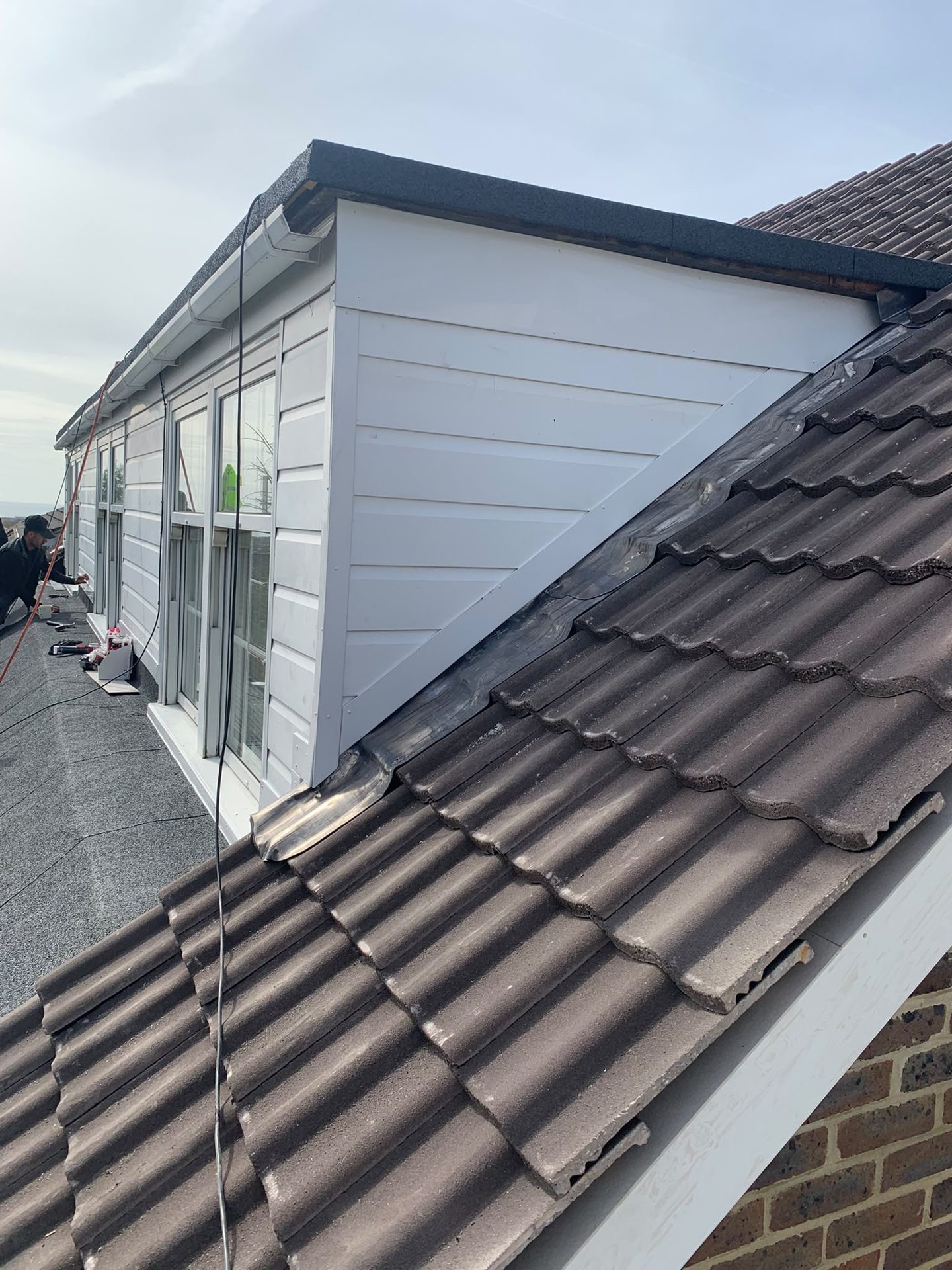
Fascias, soffits and guttering project photograph

Roofline

Fascias, Soffits & GutteringLandmark Roofing Solutions

Keep roof edges supported, ventilation considered and rainwater moving towards the right drainage points.

Service overview

A roofline needs to work as a connected system

Fascias, soffits and gutters do different jobs, but defects in one can affect the others. A leaking gutter can repeatedly wet the fascia behind it. Decayed timber can weaken gutter fixings, changing the fall and causing further overflow. Replacing the most visible component without checking its support and drainage connections can leave the underlying fault in place, even when the roof edge looks smarter from the street.

Landmark Roofing Solutions is a family-run roofing business owned by Robbie Giles, with a four-person team. Contact Robbie to confirm availability at your property. Our roofline work considers the condition of existing boards, gutter runs, downpipes and accessible eaves details so the proposed scope relates to the problem rather than appearance alone.

Work may involve addressing leaking joints, renewing damaged roofline components or coordinating fascias and guttering with wider roofing work. The choice depends on condition, access and how the parts connect. uPVC can provide a practical external finish, but it should not be used to hide rotten supporting timber. Similarly, replacing soffits should not unintentionally obstruct ventilation that the roof construction needs.

Ask Robbie how assessment and quoting will be arranged for the proposed work. Landmark Roofing Solutions holds full public liability and employers’ liability insurance. Call 07832 878937 to discuss a roofline problem; the phone is always answered 24/7. If a board or gutter section is hanging loose above an entrance, keep people away from the area rather than attempting to secure it from an unsuitable ladder.

Why it can’t wait

Roofline faults worth investigating

Overflow, staining and sagging are symptoms. Finding the cause helps establish which components actually need attention.

Overflowing or leaking gutter joints

Leaves, debris, displaced seals or poorly aligned components can send water over the edge or behind the gutter. The pattern of overflow matters. Water spilling along a whole run suggests different possibilities from a single joint that drips whenever rain begins.

Rotten or damaged fascia boards

Timber fascias can deteriorate where moisture repeatedly reaches them. Because gutter brackets may rely on the fascia for support, decay can affect alignment as well as appearance. Covering unsound timber without assessing it risks leaving new external materials fixed to a failing base.

Loose, split or unsuitable soffits

Damaged soffits can leave openings at the underside of the roof edge. Replacement also needs to consider ventilation: a continuous unvented finish is not appropriate where the roof depends on airflow through that location. The existing construction should guide the detail.

Sagging gutters and incorrect falls

Poor support, weakened fixings or an unsuitable fall can leave water standing in a gutter. Simply sealing joints does not correct alignment. The run, bracket positions and outlet location need considering together so water has a practical route towards the downpipe.

Blocked or disconnected downpipes

A gutter may overflow because the downpipe below it is restricted or disconnected. Debris can collect at bends or connections, while displaced sections discharge against the wall. Roofline work should consider where the collected water goes, not stop at the gutter outlet.

Common mistakes we see

  • Capping over rotten fascia timber without establishing whether the remaining support is sound.
  • Installing replacement soffits without considering the roof construction and its ventilation needs.
  • Sealing a leaking gutter repeatedly while ignoring poor falls, weak brackets or a blocked downpipe.
  • Choosing components by appearance alone without checking compatibility, capacity and suitable fixing positions.

Our process

How the job runs, step by step

  1. 01

    Identify where water or movement appears

    Tell us which elevation is affected, when overflow occurs and whether boards or gutter sections have moved. Ground-level photographs can help describe the issue. Mention any nearby extension, conservatory or restricted access because these can influence how the roofline is safely reached.

  2. 02

    Assess boards, drainage and eaves details

    The inspection considers fascia condition, soffit arrangement, gutter supports, joints and downpipe routes. Accessible signs of rotten timber or defective eaves support are relevant to the scope. Where concealed materials cannot be assessed fully, that uncertainty should be recognised before a covering-only approach is chosen.

  3. 03

    Agree the repair or replacement scope

    Discuss assessment, quote arrangements and the proposed roofline work with Robbie. Discuss which runs or elevations are included, whether timber repairs are anticipated and how ventilation will be treated. Colour and profile choices should be considered alongside compatibility and the practical drainage arrangement.

  4. 04

    Address support before fitting components

    Where agreed, deteriorated material is dealt with before replacement components are fixed. Fascias, soffits, brackets, gutter runs and downpipes need to work together. Any additional hidden damage uncovered during removal should be discussed rather than covered over simply to maintain the original appearance or scope.

  5. 05

    Review alignment and explain maintenance

    The completed work is reviewed for the agreed connections, support and drainage arrangement. Ask which existing components remain and what maintenance they may need. Gutters and outlets still require attention over time, especially where nearby trees contribute leaves or debris to the roofline.

What you get

The benefits of doing it properly

Rainwater directed away from roof edges

Sound joints, suitable falls and connected downpipes help carry runoff along its intended route. Addressing those details can reduce repeated wetting of fascia boards and external walls caused by a defective gutter arrangement.

Sound support for gutter fixings

Assessing fascia condition before fitting new brackets helps avoid relying on decayed timber. The external finish matters, but dependable support is what allows the drainage components to remain properly positioned.

Ventilation considered during soffit work

Roof construction influences how eaves ventilation should be maintained. Considering that requirement before replacement helps avoid blocking an existing airflow path simply because a solid board offers a convenient or uniform-looking finish.

Repair decisions based on condition

Not every leaking joint requires a complete roofline replacement. Equally, a small visible defect may sit beside wider deterioration. A condition-led scope helps distinguish worthwhile local work from areas needing more comprehensive attention.

Coordinated roof edge details

Considering the relationship between the roof covering, eaves support and gutter position can expose problems that replacing a gutter alone would miss. This is particularly useful when roofline work accompanies a larger roofing project.

An insured family-run business

Landmark Roofing Solutions has full public liability and employers’ liability insurance. You can discuss the proposed work with a four-person family-run roofing business and discuss the proposed scope and quote arrangements.

In detail

Looking beyond the visible roofline finish

Materials, support, ventilation and drainage all need consideration when planning fascia, soffit and guttering work.

uPVC fascia boards and the timber behind them

uPVC fascias can provide a practical roofline finish without the same painting requirements as exposed timber. However, the right approach depends on the existing construction and condition. A cover board over sound material is a different proposition from using a new surface to conceal timber that has lost its strength through decay.

Where rot is suspected, the source of moisture matters as well as the damaged board. A leaking gutter, defective eaves detail or poor water discharge can continue causing problems after a cosmetic replacement. The proposed scope should explain what will support the new components and how the associated water problem will be addressed.

Soffits and ventilation at the eaves

Soffits close the underside of the projecting roof edge, but they may also form part of the roof ventilation arrangement. Depending on the construction, ventilation may be provided through the soffit or another eaves detail. Replacing a vented board with a solid one without considering the wider roof can remove a necessary airflow route.

Ventilation is not solved simply by adding visible holes either. The path into the roof must remain appropriate and unobstructed, including where insulation approaches the eaves. Any recommendation should relate to the actual construction. Existing condensation symptoms may also require investigation beyond the external roofline rather than being attributed automatically to a single board.

Gutter falls, brackets and compatible joints

Guttering needs secure support and an arrangement that directs runoff towards outlets. A sag between brackets can hold water, while a poor fall may leave one end repeatedly overflowing. Components also need to fit together correctly; combining superficially similar profiles or joints can create persistent leaks that extra sealant does not reliably resolve.

Material movement and the condition of seals can influence how a joint performs. A sensible assessment considers whether adjustment or a compatible replacement is sufficient, or whether the surrounding run is also deteriorated. Water testing can be useful where appropriate, but drainage performance also needs to be considered in relation to the roof area being served.

Downpipes, discharge and wider roofing work

A functioning gutter cannot compensate for a blocked or disconnected downpipe. Bends, offsets and lower connections all form part of the water route. If the eventual discharge point is restricted, renewing the upper gutter alone may not resolve the overflow. The inspection should distinguish roofline defects from problems requiring attention elsewhere in the drainage system.

Roofline work can also be coordinated with roof renewal where appropriate. Supplied customer accounts mention fascias and guttering alongside a new roof, and another describes a new roof with guttering and loft boarding. These examples show how work can overlap, but your agreed scope should identify the particular components included rather than assume extras are part of every job.

FAQs

Fascias, Soffits & Guttering: your questions answered

The cost depends on the length and height of the roofline, access, material choices and any hidden timber repairs. A local gutter repair differs from replacing boards and drainage around several elevations. Ask Robbie about quote arrangements for the proposed scope.

Next step

Discuss a practical plan for your roofline

Call Landmark Roofing Solutions on 07832 878937 about fascias, soffits or guttering for your property. The phone is answered 24/7.

07832 878937
  • Fully insured
  • Fully insured · Family-run

Roof emergency?

We answer 24/7. Day or night.

07832 878937
Call 24/7Get a Quote