
Landmark Roofing Solutions logo
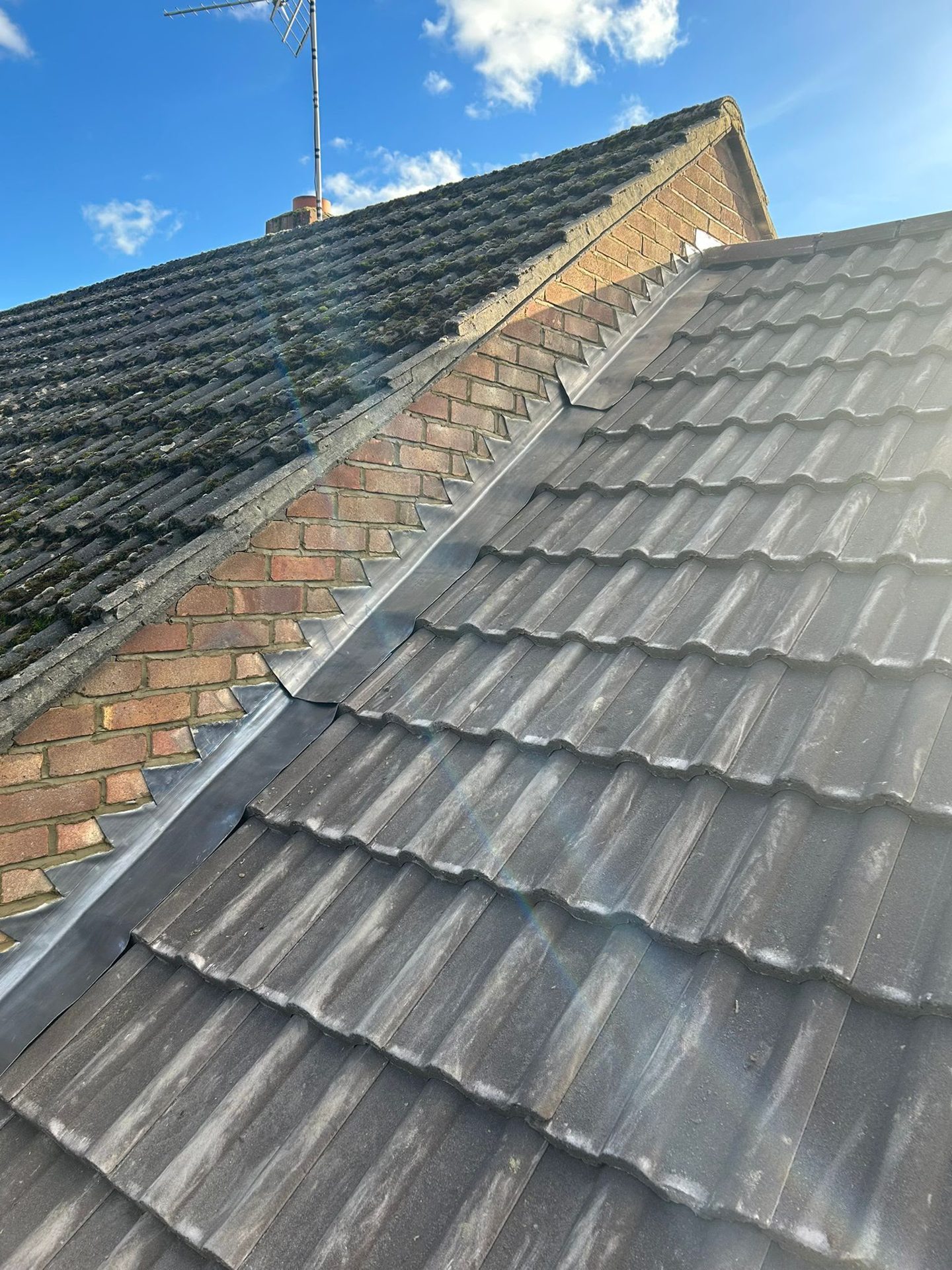
Tiled roof repairs project photograph

Roof Repairs

Tiled Roof RepairsLandmark Roofing Solutions

Find the cause behind slipped tiles, persistent leaks and failing roof details before deciding what needs repairing.

Service overview

Repair the fault, not just the visible symptom

A cracked tile can be straightforward to spot, but the route water takes into a building is rarely obvious from the room below. Rain may enter around a ridge, travel along underlay and emerge some distance away. Tiled roof repairs therefore start with understanding the covering, its fixings and the details around it. Replacing the nearest tile to a ceiling stain without checking those connections can leave the original problem unresolved.

Landmark Roofing Solutions is a family-run business owned by Robbie Giles, with a four-person team. Contact Robbie to confirm availability at your property. Whether your roof has plain clay tiles or interlocking concrete tiles, the practical question is the same: which elements remain serviceable, and what work is needed to restore the weathering arrangement without disturbing sound areas unnecessarily?

A useful repair recommendation separates isolated damage from wider deterioration. One slipped tile does not automatically mean a replacement roof, while repeated failures across several slopes may need more than another local patch. Discuss the proposed scope, assessment and quote arrangements with Robbie. Qualifying repairs carry a five-year warranty, depending on the extent of work; the applicable cover should be confirmed for your particular repair.

For urgent roofing problems, call 07832 878937. The phone is always answered, 24/7. Explain whether water is entering, tiles have fallen or anything appears loose above a path or entrance. Keep clear of affected areas and do not climb onto the roof. Emergency arrangements and permanent repairs depend on safe access, weather conditions and what the inspection reveals.

Why it can’t wait

Common tiled roof problems

Similar symptoms can have different causes. These are important points to investigate before choosing a repair.

Cracked, slipped or missing tiles

Impact, weathering or failed fixings can leave gaps in the covering. The surrounding tiles, battens and underlay need checking as well as the visible defect. A replacement must suit the existing profile and laying arrangement rather than simply look similar from ground level.

Loose ridge and hip tiles

Cracked bedding or unstable ridge components can allow movement and water entry. Repair decisions depend on the condition of the existing assembly. Repointing the visible surface alone will not secure a ridge tile that has lost its underlying support or effective fixing.

Leaks around valleys and junctions

Valleys collect runoff from adjoining slopes, while abutments rely on correctly formed weathering details. Debris, damaged linings or unsuitable tile cuts can interrupt drainage. The investigation should follow how water moves through the junction rather than focus only on the nearest damp patch.

Deteriorated underlay or battens

Tiles form the main weathering layer, but the materials beneath them still matter. Torn underlay, decayed battens or failed eaves support may require lifting a defined area of covering. The extent is often clearer once the affected section can be safely opened.

Repeated leaks after small repairs

Recurring problems may indicate that the original entry point was missed or that several components are ageing together. Comparing the repair history with current findings helps distinguish a sensible targeted intervention from spending repeatedly on a roof that needs broader attention.

Common mistakes we see

  • Assuming the tile directly above an internal stain is necessarily where water enters.
  • Using surface sealant as a substitute for compatible tiles, sound fixings and properly formed junctions.
  • Walking across a tiled roof without suitable access, risking injury and additional cracked tiles.
  • Replacing visible tiles without considering deteriorated battens, underlay or adjacent ridge details.

Our process

How the job runs, step by step

  1. 01

    Describe the damage and its location

    Tell us when the problem started, which rooms are affected and whether anything changed after strong winds. Photographs taken safely from the ground can help explain the issue. If tiles are falling or water is entering near electrical fittings, keep away from the immediate hazard.

  2. 02

    Inspect the covering and associated details

    The assessment considers tile type, roof pitch, fixings, ridges, verges and nearby junctions. Where access allows, signs beneath the covering can help trace the fault. Any limits to what can be inspected should inform the recommendation rather than be treated as proof that hidden materials are sound.

  3. 03

    Agree a defined repair scope

    Ask Robbie how the roof will be assessed and how a quote can be arranged. This might involve individual tiles, a local strip-and-repair area or attention to ridge and verge details. Discuss access requirements, matching limitations and whether the extent qualifies for the five-year repair warranty before proceeding.

  4. 04

    Repair the affected roof assembly

    The repair should address the identified defect and any agreed associated work beneath it. Tiles need compatible profiles, appropriate support and secure fixing. If opening the area reveals additional deterioration, its implications should be discussed before the scope is expanded rather than concealed beneath replacement tiles.

  5. 05

    Review the completed work

    The repaired area and its connections to the surrounding roof are checked, and the agreed work is explained. Keep the written scope and any applicable warranty details together. Ask what future signs to watch for, particularly if other parts of an older roof remain outside the repair.

What you get

The benefits of doing it properly

A clearer explanation of the leak

Connecting internal symptoms with external defects gives you a more useful basis for decisions than simply identifying a broken tile. It also helps explain why the proposed repair may extend beyond the most visible damage.

Sound roofing retained where appropriate

A targeted repair can preserve serviceable tiles and avoid unnecessary disturbance. The decision remains condition-led: retaining existing materials only makes sense when they can continue performing their part in the roof assembly.

Compatible replacement details

Tile profile, overlap and fixing requirements affect performance. Considering those details reduces the risk of inserting a visually similar component that does not sit correctly or shed water as the surrounding roof requires.

Attention beneath the covering

Checking accessible battens and underlay helps identify problems that a cosmetic tile replacement would leave behind. Where hidden deterioration is found, the repair scope can be reconsidered with a clearer understanding of the roof.

Written scope and qualifying cover

A written quote helps establish what is included and what remains outside the work. A five-year warranty applies to qualifying repairs, depending on their extent, with the relevant terms confirmed for the agreed job.

An insured local roofing team

Landmark Roofing Solutions holds full public liability and employers’ liability insurance. You can discuss the problem with a family-run, four-person business.

In detail

Understanding what makes a tiled repair last

Good repair decisions consider the roof as an assembly rather than a collection of interchangeable tiles.

Clay, concrete, plain and interlocking tiles

Clay and concrete tiles are available in different shapes and laying formats. Plain tiles generally rely on a double-lap arrangement, while interlocking tiles have profiles designed to connect with neighbouring units. A repair must respect the original system, including the pitch and overlap requirements applicable to the particular tile.

Appearance also needs realistic expectations. New tiles can differ from weathered coverings in colour and surface texture, even when their shape is suitable. Matching should prioritise technical compatibility before appearance. Reclaimed tiles are not automatically appropriate either: their condition, dimensions and suitability still need consideration before they are incorporated into a repair.

Ridges, hips and verges need secure details

The edges and high points of a pitched roof are exposed to demanding weather conditions. Mortar-bedded details can crack or lose adhesion, while mechanically fixed dry ridge and verge systems depend on the correct components and installation. A loose ridge should be assessed as a fixing problem, not simply a gap to fill.

Where an existing detail is repairable, the scope should explain how stability and weathering will be restored. Where a different arrangement is proposed, compatibility with the roof matters. A dry system is not a universal clip-on remedy for every existing roof, and a neat external finish does not prove the supporting detail is sound.

Underlay, battens and the eaves

Underlay provides a secondary route for moisture beneath the tiles, but it is not intended to compensate indefinitely for an open covering. At the eaves, unsupported or deteriorated material can allow water to reach timber instead of discharging towards the gutter. These faults may remain hidden until tiles are lifted.

Battens support the tile covering and provide fixing positions. Where timber has deteriorated, attaching replacement tiles to it is not a durable solution. Local opening-up can establish the necessary repair area, although its final extent may depend on what is found. Roof ventilation should also remain unobstructed when eaves details are repaired.

Choosing between repair and wider renewal

A repair is most persuasive when the damage is localised and the surrounding roof remains serviceable. Widespread tile failure, repeated fixing problems or extensive deterioration beneath the covering can change that judgement. The aim is to compare realistic options rather than assume either a small patch or a complete replacement is always preferable.

Ask what the proposed work will resolve and what limitations remain. A repaired section does not renew every untouched component elsewhere on the roof. If replacement becomes the appropriate route, that is a separate scope: Landmark Roofing Solutions offers a 25-year warranty on new slate and tiled roofs, distinct from qualifying repair cover.

FAQs

Tiled Roof Repairs: your questions answered

The cost depends on the fault, access, tile compatibility and how much associated work is required. Replacing a small number of tiles is a different task from rebuilding a ridge or repairing underlay and battens. Ask Robbie about quote arrangements and the proposed scope.

Next step

Get a clear plan for your tiled roof repair

Call Landmark Roofing Solutions on 07832 878937 to discuss the damage and arrange the next step. For urgent roof problems, the phone is answered 24/7.

07832 878937
  • 5-year warranty on qualifying repairs
  • Fully insured · Family-run

Roof emergency?

We answer 24/7. Day or night.

07832 878937
Call 24/7Get a Quote