Landmark Roofing Solutions logo
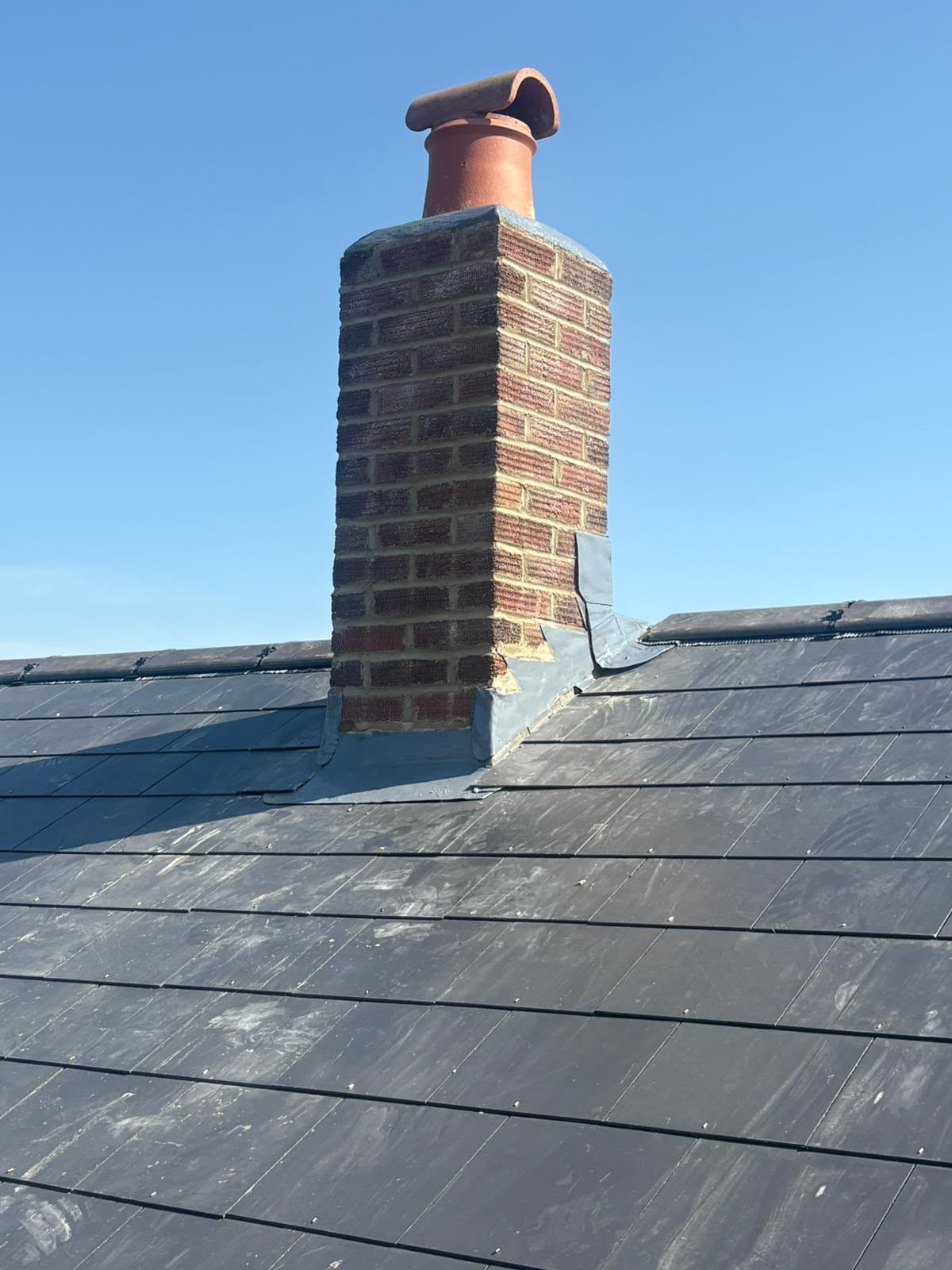
Slate roof repairs project photograph

Roof Repairs

Slate Roof RepairsLandmark Roofing Solutions

Careful investigation of slipped slates, failing fixings and leaking details, with repair advice based on the condition of the whole affected area.

Service overview

Keep a sound slate roof working as it should

A slate roof can develop a local problem without every slate needing replacement. A cracked piece, failed fixing or damaged flashing may create an opening while much of the covering remains serviceable. Equally, repeated slipping across a slope can signal a more general fixing problem. Landmark Roofing Solutions provides slate roof repairs for your property, helping distinguish an isolated defect from a roof that needs more extensive attention.

We are a family-run business owned by Robbie Giles, with a four-person team and full public liability and employers’ liability insurance. Our approach is to consider the slate, its fixing and the surrounding roof detail together. Putting a slipped piece back in position is not enough if it remains insecure, and replacing a broken slate cannot resolve a leaking chimney junction beside it.

Matching matters for both appearance and performance. Replacement slate should suit the existing dimensions, thickness and laying pattern, with the right overlap for the roof. Reclaimed slate can sometimes provide a closer visual match, but its condition and suitability still need checking. Colour alone is not a reliable guide: a piece that looks similar may be too thick, too short or unsuitable for the surrounding arrangement.

The aim is an honest repair recommendation, not a promise that every ageing roof can be kept going indefinitely. Supplied reviews describe Robbie explaining serious hidden damage and identifying a rotten roof before it worsened. For slate roofing, that same distinction is important: durable slates may sit above worn fixings or damaged timber, and the repair needs to reflect the condition that inspection actually reveals.

Why it can’t wait

Slate roof defects worth investigating

A missing slate is easy to notice, but less obvious fixing and junction problems can also admit water. Keep observations at ground level and arrange inspection rather than walking over a potentially fragile covering.

Slipped slates and exposed gaps

A slate may slip when its fixing fails, leaving an opening in the weathering surface or sitting loosely above the gutter. The neighbouring slates and fixing condition need checking. Repeated displacement can indicate a wider issue rather than a series of unrelated individual accidents.

Cracked or delaminating slate

Impact, weathering or unsuitable handling can damage slate. Some pieces split through their thickness, while others lose surface layers. A replacement needs to suit the roof’s dimensions and fixing arrangement, and nearby pieces should not be forced aside in a way that causes further breakage.

Ageing nails and fixing fatigue

The slate itself may remain useful after older nails have deteriorated. Often described as nail fatigue or nail sickness, this can lead to increasing numbers of slipped pieces. Inspection needs to consider whether isolated replacement fixings are sensible or whether failure is becoming widespread across the slope.

Leaks beside flashing and valleys

Water appearing beneath a slate roof may enter through leadwork, a valley or an adjoining wall rather than the slate surface. Damaged soakers and poorly formed junctions can be difficult to identify from below. Replacing nearby slates alone will not correct a failed water-shedding detail.

Storm damage and loose roof edges

Strong wind can disturb vulnerable slates and expose weaknesses around ridges, hips and verges. Fallen fragments can create a hazard at ground level. Keep people away from the affected edge, and consider the condition of adjacent fixings rather than assuming the visible missing piece is the whole problem.

Common mistakes we see

  • Selecting replacement slate by colour alone without checking dimensions, thickness, condition and the overlap needed for the existing roof.
  • Walking directly across slates to inspect a leak; concentrated loads can break coverings and create additional hazards or damage.
  • Using sealant as a substitute for a secure fixing or correctly formed flashing, leaving the underlying defect unresolved.
  • Continuing to add isolated repair fixings across a slope without investigating whether widespread nail deterioration makes broader work more appropriate.

Our process

How the job runs, step by step

  1. 01

    Understand the pattern of failure

    Describe the slipped or broken slates, any internal damp and whether similar repairs have been needed before. The number and distribution of affected pieces can help guide the investigation. Photographs taken safely from ground level are useful, but avoid moving loose slate or climbing for a closer view.

  2. 02

    Inspect slate, fixings and junctions

    Assess the affected area using suitable safe access. The inspection considers slate condition, fixing security and relevant details such as valleys, flashings and roof edges. Where an area is opened, accessible battens and underlay can provide further evidence about whether the problem is local or more widespread.

  3. 03

    Choose a suitable repair and slate match

    Consider replacement dimensions, thickness, appearance and the appropriate fixing method. Reclaimed slate may be an option where suitable material can be sourced, but availability is not guaranteed. Discuss quote arrangements and any limitations of a local repair before agreeing the scope.

  4. 04

    Repair without overlooking surrounding defects

    Damaged or slipped pieces need a secure, suitable repair that respects the existing laps and water path. Methods may involve appropriate replacement fixings, slate hooks or repair tingles depending on the roof. Any associated flashing or support issue needs addressing within the agreed scope rather than being concealed.

  5. 05

    Check the detail and explain next steps

    Review the repaired area as appropriate and explain any wider concerns, such as recurring fixing failure or deteriorated adjacent slate. Confirm whether the work qualifies for the five-year repair warranty. Ongoing observations from ground level can help identify further movement without putting anyone on the roof.

What you get

The benefits of doing it properly

Serviceable slate retained

Where the surrounding roof is sound, a considered local repair can keep useful material in place. This avoids assuming that one slipped slate means the whole covering must be replaced.

Matching beyond surface colour

Considering dimensions, thickness and laying pattern helps a replacement sit correctly and shed water with neighbouring pieces. Visual compatibility matters, but it should support rather than replace technical suitability.

Attention to the fixing problem

A secure repair considers why the slate moved. Distinguishing one failed fixing from a wider pattern helps avoid treating every new slip as an unrelated problem.

Junctions included in the diagnosis

Checking relevant flashing, soakers and valleys helps identify leaks that are not caused by the slate itself. This reduces the risk of replacing sound pieces while leaving the actual entry point untouched.

Clearer repair-versus-renewal advice

Understanding the condition of slate, fixings and accessible support gives you a better basis for deciding how much work is sensible. Durable coverings do not automatically mean the layers beneath remain sound.

An accountable family-run business

Landmark Roofing Solutions is owned by Robbie Giles and operates with a four-person team. Full public liability and employers’ liability insurance are in place, and qualifying repairs carry a five-year warranty.

In detail

The details that make slate repairs different

Slate is not simply a flat version of a roof tile. Its dimensions, fixing arrangement and overlap influence how a repair should be approached and whether the surrounding roof remains serviceable.

Natural slate and replacement matching

Natural slate varies in colour, texture, thickness and strength. Existing roofs may contain subtle variation even within one slope, so an exact visual match cannot always be promised. The replacement also needs appropriate dimensions and sound material; matching the colour does not compensate for a piece that cannot sit correctly.

Reclaimed slate can be useful when repairing an older covering, particularly where new material would look noticeably different. Each piece still needs assessing for cracks, delamination and usable fixing positions. Sourcing suitable reclaimed material may affect the programme, and appearance should never be prioritised over a sound, compatible repair.

Nails, hooks and repair tingles

Replacing an individual slate can be more involved than sliding it back into place because the original fixing position may sit beneath the course above. Suitable repair methods can include slate hooks or tingles, selected according to the roof and detail. Their purpose is to provide secure support without creating an avoidable water path.

Fixing suitability depends on the existing construction, exposure and condition of the surrounding material. Repeated visible repair fixings across a slope may be a sign that the wider fixing system needs investigation. A local method should not be presented as a cure for widespread deterioration simply because it can hold one piece.

Headlap, pitch and supporting layers

Slate roofs rely on overlapping courses to keep rain out. The necessary arrangement depends on factors including roof pitch, slate size and exposure. A replacement that is too short or positioned incorrectly can reduce the effective overlap even if it appears tidy when viewed from the ground.

Battens provide fixing support and underlay forms part of the wider roof assembly. Rotten battens, damaged underlay or other hidden defects may only become clear when an area is opened. A new slate above defective support is not a complete repair, so the findings may justify adjusting the proposed work.

Leadwork, valleys and difficult leak paths

At chimneys and walls, slate works with flashing and soakers to direct rain away from vulnerable junctions. Lead needs appropriate detailing and allowance for movement. A leak near these features may be caused by damaged leadwork or masonry joints rather than a cracked slate directly above the internal stain.

Valleys collect water from adjoining slopes and can be affected by debris, damaged linings or poorly arranged slates at their edges. Investigation should consider the whole water route. A repair that obstructs the channel or relies on surface sealant may leave the roof vulnerable during heavier or wind-driven rain.

Homes, commercial buildings and exposed locations

On a house, slate repair planning may involve access above a conservatory, shared passage or occupied bedroom. The fragile nature of the covering means safe access needs thought even for a small defect. Occupants should not attempt to walk across the roof to point out the damaged piece.

Commercial buildings and larger shared properties may introduce additional access permissions, public routes and operational constraints. More exposed roof positions can also place greater demands on fixing security. Explain these circumstances when arranging an inspection so the method and access can be considered alongside the actual slate repair.

FAQs

Slate Roof Repairs: your questions answered

Cost depends on the cause of the damage, access and the materials required. Matching slate, repairing flashing or dealing with deteriorated support can change the scope. Ask Robbie how assessment and quoting will be arranged rather than estimating from the number of slipped pieces visible from below.

Next step

Arrange a closer look at your slate roof

Call Landmark Roofing Solutions on 07832 878937 to discuss slipped slates, recurring leaks or fixing concerns for your property. For urgent damage, the phone is answered day and night.

07832 878937
  • 5-year warranty on qualifying repairs
  • Fully insured · Family-run

Roof emergency?

We answer 24/7. Day or night.

07832 878937
Call 24/7Get a Quote