
Landmark Roofing Solutions logo
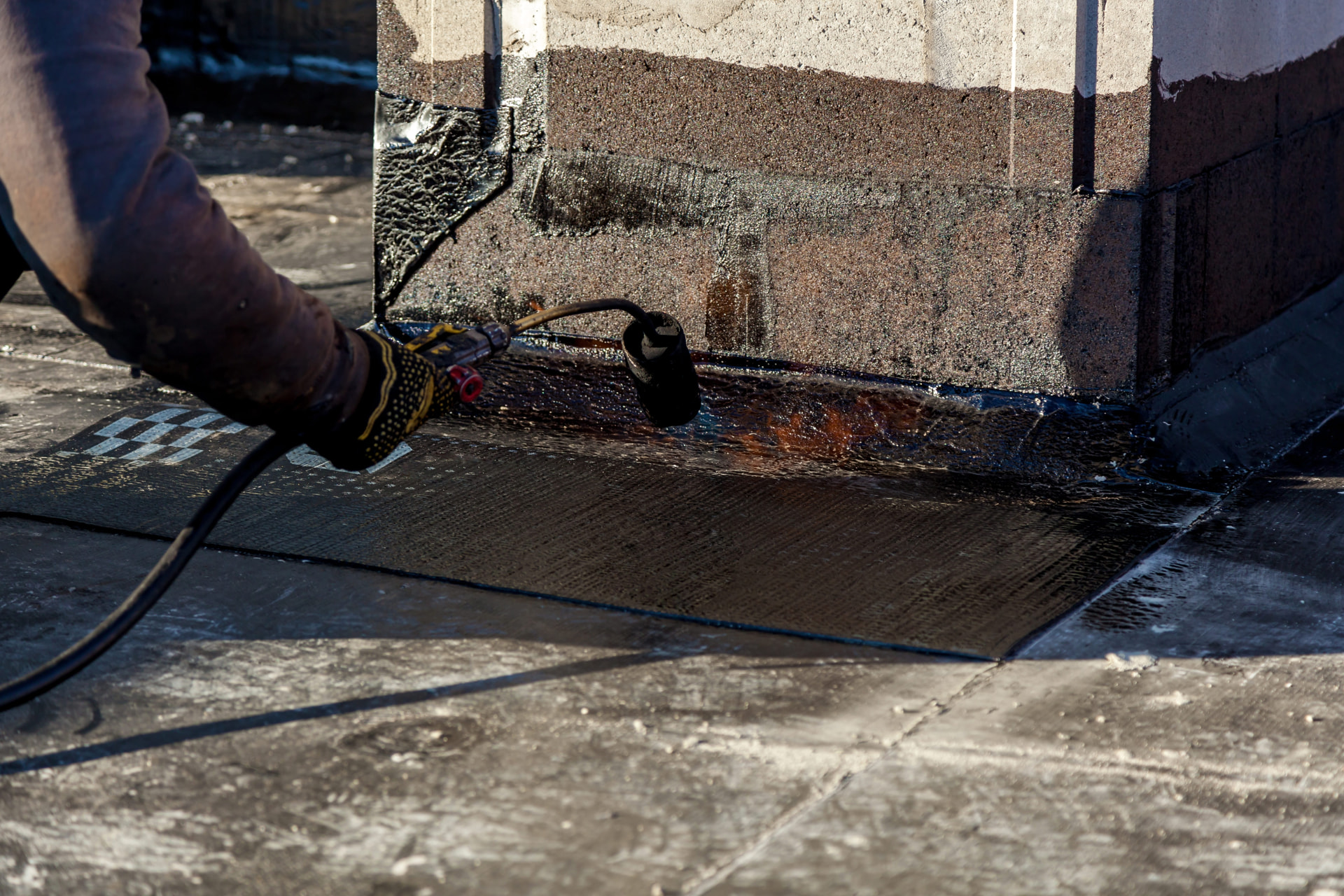
Roofer repairing a flat roof junction around the base of a brick chimney

Roof Repairs

Flat Roof RepairsLandmark Roofing Solutions

Understand whether your leaking flat roof needs a local repair, a suitable overlay or a more complete replacement.

Service overview

Start with the leak route and the roof beneath it

Flat roof leaks can be frustrating because water does not always appear directly below the defect. It can travel beneath a covering or along a deck before becoming visible indoors. A split, failed outlet or poorly formed upstand may be responsible, but the condition of the surrounding roof also matters. Repairing the first suspicious mark without considering the wider assembly can leave you dealing with another leak after the next spell of rain.

Landmark Roofing Solutions offers roof repairs. The family-run business is owned by Robbie Giles and has a four-person team. Our flat roofing work includes felt, EPDM rubber and GRP fibreglass, with three-layer felt systems a particular specialism. Repair recommendations should reflect the existing material, the condition of the deck and whether the roof can reasonably support the proposed intervention.

The choice is not always simply repair or replace. A local defect in an otherwise serviceable covering may justify a targeted repair. An overlay needs a suitable existing substrate and a considered build-up. Widespread deterioration, trapped moisture or an unsound deck can make replacement more appropriate. Ask Robbie about assessment and quote arrangements for your particular roof rather than treating every leaking roof as the same problem.

Call 07832 878937 for urgent flat roof problems; the phone is always answered 24/7. Keep away from sagging ceilings and do not step onto a flat roof to investigate. Qualifying repairs carry a five-year warranty depending on the extent of work. New flat roof installations have a separate ten-year warranty, so the cover relevant to your particular scope should be confirmed before work proceeds.

Why it can’t wait

Flat roof defects that need a closer look

The surface appearance is only part of the diagnosis. Drainage, edges and the supporting structure can all influence the repair.

Splits, cracks and punctures

A break in the waterproof covering can admit water even when the surrounding roof looks reasonable. Repairs need to suit the material and accommodate the detail around the defect. Applying an incompatible coating over a crack can obscure the problem without providing a dependable connection.

Blisters and lifting felt

Raised areas can develop where layers separate or moisture becomes trapped. Not every blister has the same significance, and cutting into one without a repair plan can create a leak. Its position, condition and relationship to surrounding deterioration should guide the next step.

Standing water and restricted outlets

Ponding can result from blocked drainage, insufficient falls or changes in the supporting deck. Clearing an outlet may help where blockage is the cause, but it will not correct a structural dip. Persistent water should prompt assessment of drainage and the roof build-up together.

Failed upstands and edge details

Junctions with walls, rooflights and roof edges are common places for defects to develop. Water can enter behind an otherwise intact covering when a termination fails. The repair may therefore need to address the vertical detail rather than add another patch to the main roof surface.

A soft deck or recurring leaks

Softness, visible deflection or leaks appearing in different places can indicate a wider problem. A surface patch cannot restore decayed supporting material. The extent of moisture damage may only become clear through appropriate opening-up, which can change whether repair remains a sensible option.

Common mistakes we see

  • Applying a general-purpose coating without checking compatibility with felt, EPDM or GRP.
  • Treating standing water as a surface-only problem without assessing outlets, falls and deck condition.
  • Overlaying a wet or deteriorated roof simply to avoid investigating the materials underneath.
  • Walking onto a roof with an unknown deck condition or attempting repairs beside an unprotected edge.

Our process

How the job runs, step by step

  1. 01

    Establish the leak history

    Tell us where water appears, whether it follows heavy rain and what repairs have already been attempted. Mention any rooflights, wall junctions or recurring ponding nearby. Photographs taken without accessing the roof can help explain the symptoms, but they cannot establish the condition of hidden layers.

  2. 02

    Assess the covering, drainage and support

    The inspection considers the waterproof material, seams or joints, perimeter details and outlets. Accessible signs of deck deterioration are important when deciding whether a surface repair is appropriate. Any uncertainty about concealed moisture or supporting materials needs to be accounted for in the proposed approach.

  3. 03

    Compare repair, overlay and replacement

    Discuss the recommended scope and quote arrangements with Robbie. The discussion should distinguish what a local repair can resolve from defects elsewhere. Where an overlay or replacement is proposed, the existing substrate, drainage and intended build-up need consideration rather than relying on surface appearance alone.

  4. 04

    Complete the agreed system-specific work

    Preparation and repair methods need to suit the existing covering and conditions. Junctions, edges and outlets must connect with the waterproof layer. If opening the roof reveals damage beyond the agreed area, the implications should be discussed before that additional work is incorporated into the job.

  5. 05

    Check the repaired details and explain care

    The completed area is reviewed alongside its connections to the surrounding roof. Keep the written scope and any qualifying warranty information. Ask about suitable inspection and maintenance arrangements, particularly keeping drainage routes clear without damaging the covering or putting yourself at risk on the roof.

What you get

The benefits of doing it properly

A repair suited to the existing material

Felt, EPDM and GRP behave differently and need compatible repair details. Identifying the covering first avoids treating every flat roof as though the same adhesive, patch or coating will provide an appropriate solution.

Attention to the hidden supporting deck

Considering the deck helps prevent money being spent on a surface repair over unsound material. Where its condition is uncertain, that limitation can be discussed rather than hidden behind an apparently tidy new finish.

Practical drainage assessment

Looking at outlets, falls and standing water helps distinguish a blockage from a wider drainage problem. That distinction matters because renewing the waterproof layer alone will not necessarily change where water collects.

Clearer choices before committing

A written scope gives you a basis for comparing a local repair with more extensive work. You can ask what remains untouched, what assumptions have been made and why the recommended option fits the inspected condition.

Defined qualifying repair protection

A five-year warranty applies to qualifying repairs, depending on their extent. Confirming the applicable terms for the agreed scope avoids confusing a repair warranty with the separate ten-year warranty on new flat roof installations.

An insured team and an answered phone

Landmark Roofing Solutions holds full public liability and employers’ liability insurance. The phone is answered 24/7, giving you a way to report an urgent problem without assuming that unsafe conditions permit immediate roof access.

In detail

What determines the right flat roof repair?

The most useful recommendation connects the visible defect with the material, supporting layers and route rainwater should take.

Felt repairs and layered waterproofing

Felt roofing relies on a correctly formed waterproof assembly, with particular attention to laps, edges and upstands. Weathering, movement or damaged details can interrupt that assembly. A repair needs sufficient sound material around the defect to form a suitable connection, rather than simply covering the visible split with whatever product is available.

Landmark Roofing Solutions specialises in three-layer felt systems. That knowledge is relevant when assessing existing felt roofs, but it does not make every old covering repairable. Brittle surfaces, repeated patching or deterioration beneath the felt may limit the usefulness of another local intervention. The recommendation should explain those limitations clearly.

EPDM and GRP require different approaches

EPDM is a flexible rubber membrane, while GRP forms a rigid fibreglass covering. Their repair methods are not interchangeable. Surface preparation, compatible materials and the condition around seams or trims influence the result. A defect near a roof edge may require a different solution from a puncture in an otherwise sound central area.

Movement and substrate condition also matter. Cracking in a GRP surface can be associated with the detail beneath it, while an EPDM leak may involve a junction rather than the main sheet. The assessment should therefore establish what has failed and why, instead of choosing a repair solely from the name of the covering.

Ponding, outlets and the supporting deck

A flat roof is normally designed to shed water towards drainage points rather than retain it indefinitely. Leaves and debris can obstruct outlets, but some roofs also have low areas caused by inadequate falls or deck movement. The distinction matters because removing debris and rebuilding a deficient section are very different scopes of work.

Persistent moisture can affect timber components beneath the covering. Where decay or softness is suspected, a waterproof patch is not a structural repair. Safe inspection and, where appropriate, opening-up help establish the condition. Do not test a suspect roof by walking across it: a weakened deck may not support your weight.

When an overlay is not the answer

An overlay can only be considered where the existing roof is suitable to receive it. Moisture, adhesion, deck condition, detailing and the proposed build-up all need assessment. Adding another layer without resolving those questions can conceal deterioration and leave inadequate junctions or drainage arrangements in place beneath a new-looking surface.

Replacement may be more appropriate where the covering and supporting materials have reached the end of useful service or defects are widespread. A supplied customer account describes a flat roof leaking in different places before renewal was chosen. That illustrates why repeated leaks deserve investigation; it does not mean every leaking flat roof needs replacement.

FAQs

Flat Roof Repairs: your questions answered

It depends on the covering, defect, access and condition of the supporting materials. A local patch differs considerably from rebuilding a damaged edge or replacing wet decking. Ask Robbie about assessment and quote arrangements rather than relying on a generic estimate.

Next step

Find out what your leaking flat roof needs

Call Landmark Roofing Solutions on 07832 878937 to discuss a flat roof inspection and repair options. The phone is answered 24/7 for urgent roofing problems.

07832 878937
  • 5-year warranty on qualifying repairs
  • Fully insured · Family-run

Roof emergency?

We answer 24/7. Day or night.

07832 878937
Call 24/7Get a Quote